
A Homeowner Checklist for Buying Solar Panels in 2026
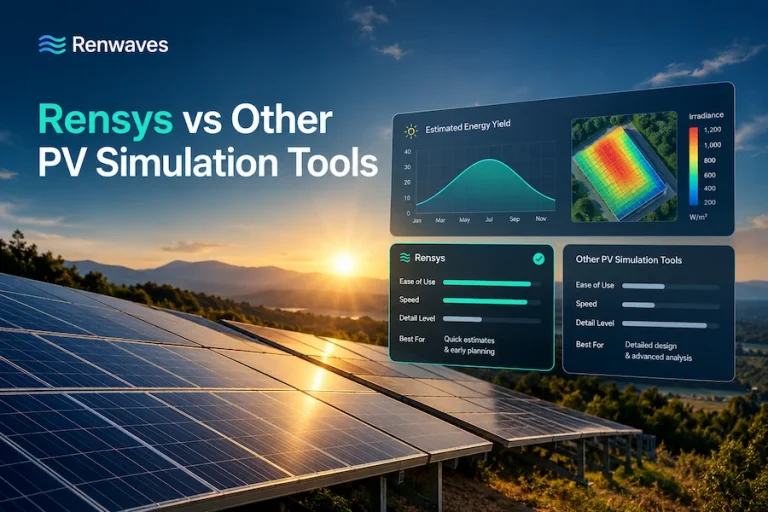
What should you check before paying for PV panels? You can also compare PV simulation tools before evaluating a system estimate.
A neighbor showed me a solar energy system proposal recently. You can cross-check its production assumptions with the Rensys PV tool. The first page looked great: a clean roof rendering, a monthly-payment estimate, a savings chart that climbed neatly for years.
What I wanted to see was on page seven. Cash price. Utility assumptions. Expected production. Export credit. Loan fees. Those were the numbers that actually told the story.
That’s more or less where residential solar is in 2026. The technology isn’t the mystery anymore. The harder part is figuring out whether a particular deal makes sense for a particular house.
Here at Renwaves, we’ll help you check some details to make sure you’re choosing the right PV system. If you’re still weighing the trade-offs first, read our pros and cons of solar cells.
First, look at this summarized homeowner checklist for buying solar panels:
| Check Before Buying Solar | What to Check |
|---|---|
| ⚡ Electricity use | Review 12 months of electricity bills |
| 🏠 Roof condition | Roof age, usable area, orientation, and shading |
| ☀️ System production | First-year production estimate and assumptions |
| 💰 System cost | Cash price vs. financed price |
| 🔌 Electricity value | Retail rate, export credits, and utility rules |
| 🔋 Battery | Purpose, backup loads, capacity, and duration |
| 🧾 Incentives | Current federal, state, local, and utility incentives |
| 💳 Financing | Interest rate, fees, term, and total payments |
| 🛠️ Equipment | Panel, inverter, and battery models and warranties |
| 👷 Installer | Warranty service, credentials, and support |
| 📈 Assumptions | Test the proposal with less optimistic assumptions |
| 🏡 Future needs | EV, heat pump, changing household electricity use |

Here are some more tips for homeowners in the USA:
The big solar numbers are real. They just aren’t your numbers.
Solar energy is now a serious part of the U.S. power system. The Energy Information Administration said developers planned to add a record 86 gigawatts of utility-scale generating capacity in 2026, with solar making up 51% of the planned additions.
Battery storage was second at 28%. EIA also expects utility-scale solar generation to rise sharply through 2027.
That tells us the technology has moved well beyond the ‘will solar ever matter?’ stage. It doesn’t tell a homeowner whether a $32,000 rooftop system is a good buy.
A roof in Massachusetts and a roof in Arizona don’t live under the same economics. Neither do two homes in the same ZIP code if one has heavy afternoon shade, a pool pump, and an EV while the other has low usage and a clean roof. The utility rate matters. So does the export rule. So does the condition of the roof.
The national story is useful context. The decision at the kitchen table is local.
I would start with the electric bill on my checklist
Before talking about panels, I’d pull twelve months of electric bills. Not one summer bill. Not an average someone typed into a proposal. The actual year.
Why? Because the house is the load. A family using 8,000 kWh per year needs a different system from one using 18,000. Air conditioning, electric heat, pool equipment, an EV charger, a well pump, occupancy – all of that changes the picture.
Then I’d look at what might change. Is another EV coming? Is the owner planning a heat pump? Is a child moving out? Is the home likely to be sold in five years? Solar is a long-lived asset, so today’s usage is only the starting point.
After that, the roof. Which sections are actually usable? What gets shaded at 4 p.m.? How old are the shingles? A proposal can look perfect while quietly assuming every square foot of roof performs the same way. It doesn’t.
The value of the electricity matters as much as the cost of the panels
People naturally ask, ‘How much does the system cost?’ The second question should be, ‘What is each kilowatt-hour it produces worth to me?’
Power used in the home may offset electricity bought at the retail rate. Power sent back to the grid may be credited under a completely different formula. If the export credit is weak, a system that produces a lot at noon can still have mediocre economics if the house uses most of its electricity after sunset.
That is where national savings claims lose their usefulness. They cannot know the customer’s tariff. They cannot know whether the utility uses time-of-use pricing. They cannot know how much production is likely to be exported.
I would want the proposal to show, in plain language, what happens to a kilowatt-hour when the house doesn’t use it.
Batteries: useful, expensive, and easy to misunderstand
I like battery storage. I also think it is often discussed backward.
The first question shouldn’t be ‘Which battery?’ It should be ‘What problem are we trying to solve?’
Backup power is one answer. Avoiding expensive evening rates is another. Using more of the home’s own solar is another. Some utility programs create still another reason. Those jobs aren’t identical. A battery sized for a few critical circuits during an outage is not the same design as whole-home backup.
Storage is becoming important at the grid level too. EIA reported in August 2026 that U.S. utility-scale battery capacity had been growing at an average annual rate of 70% over the previous three years, reaching nearly 52 GW by the end of June. In California, large batteries increasingly charge when solar output is plentiful and discharge later.
The same basic timing issue exists in a house, just on a much smaller scale.
If a salesperson cannot explain exactly what the battery is expected to do on a normal Tuesday and during a three-hour outage, I’d keep asking questions.
Panels on the roof do not mean the grid disappears
This one still surprises people. Most grid-connected solar homes remain grid-connected in a very real sense. They import electricity when the system isn’t producing enough, and they may export when it produces more than the house is using.
During an outage, a standard grid-tied system may shut down unless the installation includes the controls and equipment needed for backup operation. That’s a safety feature, not a defect.
So if resilience is part of the sales pitch, get specific. Which circuits stay on? Air conditioning? Refrigerator? Internet? Well pump? For how long? Under what battery state of charge?
‘Backup capable’ can mean very different things in two proposals.
Old incentive advice can be expensive advice
The hardware may last decades. An article about incentives can become stale much faster.
Federal policy matters, but homeowners also have to look at state tax treatment, local programs, utility rebates, export compensation, battery incentives, and eligibility dates. The rule that applied to a friend who installed solar a couple of years ago may not apply to a project signed today.
This is also why homeowners should learn to recognize warning signs before accepting the numbers in a proposal. SolarClarity’s solar quote red flags guide walks through the kinds of proposal details worth checking before a homeowner signs.
Try to break the proposal
One simple test is to make the assumptions less friendly.
Reduce the production estimate a little. Use a smaller future utility-rate increase. Include every financing fee. Assume the family uses less electricity in a few years. Add the possibility of an inverter or battery expense outside the warranty window.
Does the project still look reasonable? Good.
Does the payback suddenly jump by years? Then the original result may depend too heavily on optimistic inputs.
This isn’t anti-solar. It’s normal due diligence. Nobody buys a rental property based only on the rosiest rent forecast. Solar deserves the same treatment.
Think beyond year one
Another number I would not ignore is the expected life of the equipment. Solar is supposed to be a long-term purchase, which means a homeowner should understand degradation, warranties, and the possibility that individual components will need attention long before the panels disappear from the roof.
The useful question is not simply whether the panels work today. It is how the system is expected to perform over the period used in the savings calculation. There are guides on how long solar panels last and recycling problems of solar panels that explain panel lifespan, degradation, and the practical difference between useful life and warranty language.
Don’t fill the roof just because you can
Increasing the number of solar panels is not automatically better.
Sometimes oversizing makes perfect sense. A homeowner may be planning an EV, a heat pump, or other new electric loads. But if exported electricity receives poor compensation, building far beyond the home’s likely usage can weaken the return.
The useful question is not ‘How many panels fit?’ It is ‘How much valuable electricity can this system produce for this household under these rules?’
The questions I would put in an email before signing
I would ask the installer for the cash price, financed price, system size, first-year production estimate, assumptions behind that estimate, panel and inverter model numbers, battery model if applicable, and the utility rule used for exported electricity.
I’d also ask what percentage of the home’s annual use the system is expected to cover, which incentives are included, who handles warranty service, and what happens if the roof needs replacement. If storage is included, I’d want the expected backup loads and duration. If financing is involved, I want the rate, term, fees, and total of payments.
Good installers generally don’t object to these questions. In my experience, the stronger the proposal, the easier it is to explain without slides. Don’t have an installer yet? You can find vetted solar installers near you and compare their quotes with this checklist.
Solar is getting less exciting. That’s probably healthy.
For a long time, the industry had to convince people that rooftop solar was real, durable technology. That argument is mostly over. The next phase is about judgment.
Some houses are excellent candidates. Some are marginal. A few are bad. A battery can be worthwhile or unnecessary. Financing can help or wipe out much of the value. Incentives can improve the numbers, but only if they actually apply.
That messiness is not a weakness in solar. It is what happens when a technology becomes normal infrastructure.
The best homeowner in 2026 is not the one who says yes fastest. It is the one who can close the proposal, put the sales pitch aside, and explain in a few sentences why the system makes sense for that house. If the explanation still holds up the next morning, the project is probably worth a serious look.
Sources
- U.S. Energy Information Administration, “New U.S. electric generating capacity expected to reach a record high in 2026.”
- U.S. Energy Information Administration, “Battery storage capacity averaged 70% growth over the last three years.”
- U.S. Energy Information Administration, reporting on solar generation in CAISO during the first five months of 2026.
- U.S. Energy Information Administration, 2026-2027 solar generation outlook.
- Solar Energy Industries Association, Solar Market Insight Report 2025 Year in Review.
Editorial note: This article is educational and does not provide individualized financial, tax, legal, or investment advice.
Are solar panels worth it?
Yes! Solar panels can save you money on your bills and provide electricity at peak hours, like summer noon.
How to ensure that the PV installer’s calculations are correct?
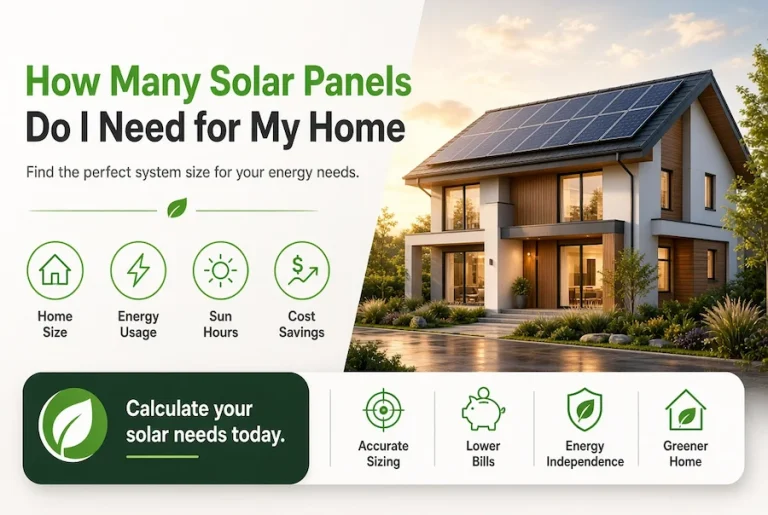
You can check it with our free solar calculator.

Randy Levine writes about solar energy and represents solarclarity.co.