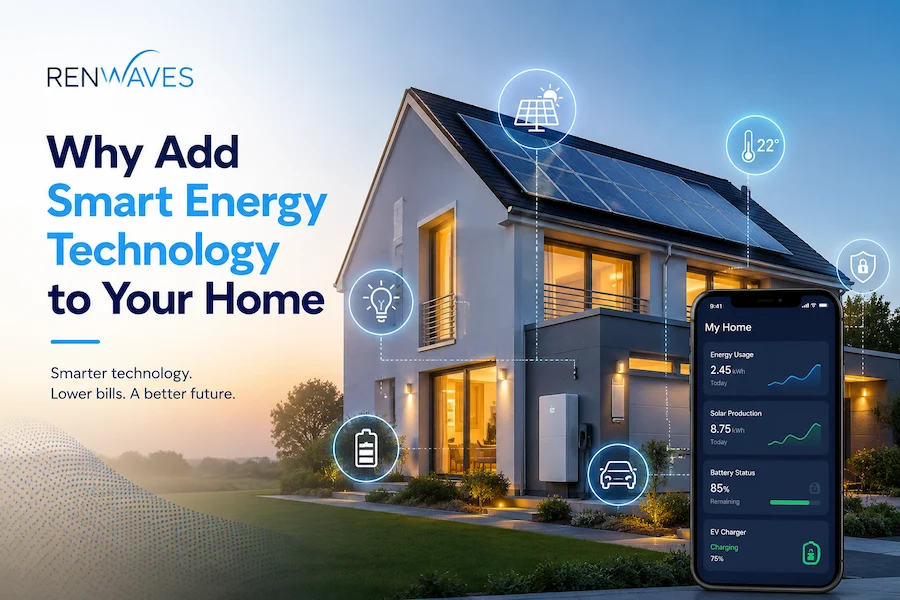
Why Add Smart Energy Technology to Your Home
Smart homes are on the rise, and many people are looking for apartments or houses with advanced monitoring and control devices.
The equipment used in a smart home might each have a different purpose. Maybe the most important part of a smart home is smart energy technology.
In this blog post, we’ll explain what a smart energy management system is and how it helps you save money on your electricity costs.
What Is a Smart Home Energy System?
📘 Definition
A smart home energy system is a combination of advanced tools that monitors and manages energy consumption and generation in your home. Sometimes, more advanced systems might automatically optimize your home’s energy.
It usually includes devices like a combination of hardware, sensors, meters, controllers, software, and connected equipment.
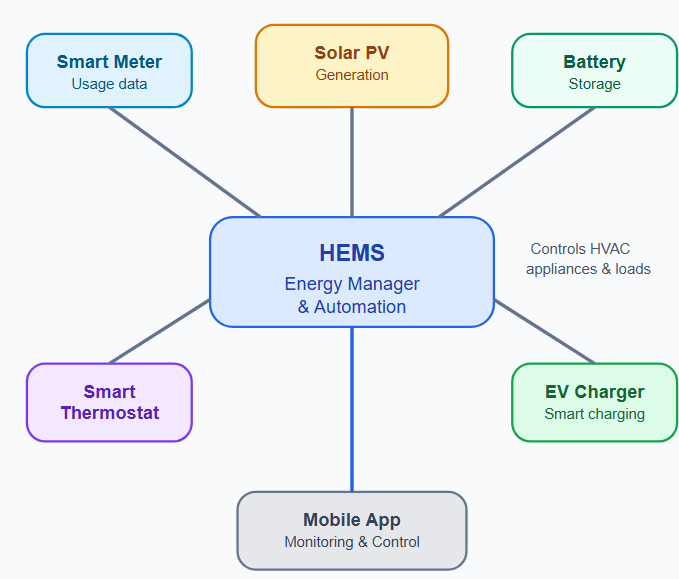
A basic system might simply show how much electricity you’re consuming in your apartment. On the other hand, a more advanced system with smart energy technology can coordinate:
- HVAC equipment
- Appliances
- Solar PV
- Batteries
- EV charging
The more advanced your smart system is, the more factors it considers to manage. For example, a well-designed system can include factors like electricity prices, occupancy, weather, solar production, and homeowner preferences.
Traditional Home vs. Smart Energy Home
To understand smart energy technologies for homes, it’s good to compare traditional homes with smart energy homes:
| Traditional Home | Homes with Smart Energy technology |
| Limited energy visibility | Real-time monitoring |
| Manual control | Automated control |
| Fixed HVAC operation | Adaptive HVAC |
| Independent appliances | Coordinated devices |
| Independent solar | Coordinated solar |
| Limited consumption data | Energy analytics |
| Basic battery settings | Smart battery control |
| Fixed EV charging | Smart EV charging |
In simple words, with smart energy technology, you have a Home Energy Management System (HEMS) that coordinates different energy generation or consumption devices to reach an optimal point.
How Does a Smart Energy System Work?
Here is a simplified workflow of a smart energy system:

Measure → Understand → Decide → Control → Learn
- Measure: Sensors, meters, inverters, thermostats, and connected equipment provide information.
- Understand: Software identifies consumption patterns, production levels, temperatures, occupancy, or electricity prices.
- Decide: Rules or algorithms determine what should happen.
- Control: Compatible equipment changes its operation.
- Learn: Historical data can be used to improve schedules and future decisions.
Key Components of a Smart Home Energy System
Here is a list of equipment used in a typical smart energy system:
| Technology | What it Does |
| Smart Meters | Detailed electricity usage tracking |
| Home Energy Monitors | Whole-home and circuit-level monitoring |
| Smart Plugs & Switches | Remote control and scheduling |
| Smart Thermostats | Automated heating and cooling |
| Smart HVAC Controls | Advanced HVAC optimization |
| Smart Appliances | Connected and scheduled appliances |
| Solar PV Systems | On-site solar electricity generation |
| Home Batteries | Energy storage and backup |
| EV Chargers | Smart EV charging |
| Sensors | Real-time environmental and energy data |
| Energy Management Systems | Centralized energy monitoring and control |
Benefits of Using Smart Energy Tech in Your Home
Millions of homes are using smart energy technologies. Here is why you need to think of smart energy technology in your home:
1. Monitor Energy Consumption
⚠️ Caution
Monitoring shows you where your energy goes. It doesn’t save you anything on its own. The savings come from what you do with that data, like adjusting schedules or fixing inefficiencies you spot.
The first benefit of using smart energy tech is to have better control over unnecessary consumption in your home.
Energy monitoring can show patterns that you can’t see in a monthly electricity or gas bill. Using a smart energy control system, you can discover that an HVAC system runs for long periods or a pool pump operates at unnecessary times.
Also, it enables you to find appliances that consume significantly more electricity than expected.
Of course, you need to note that monitoring energy does not automatically save energy.
For example, a smart energy dashboard tells you that your air conditioner consumed 8 kWh. However, it does not reduce that consumption.
The monitoring data just gives you insights into the energy consumption in your home. After that, you have to think about how you want to save energy.
2. Lower Electricity Bills
Smart energy management can reduce electricity costs. Here are some common methods to save money on electricity bills using smart technology:
- Scheduling flexible loads
- Optimizing HVAC operation
- Shifting from expensive periods
- Increasing solar self-consumption
- Charging batteries at appropriate times
- Managing EV charging
- Reducing peak demand where applicable
For example, your smart energy controller can use your solar battery during peak electricity periods when the price is high. Then, it can shift to grid electricity when the price is lower.
3. Better HVAC Efficiency
Using a smart thermostat can help you create schedules and adjust temperature based on demand. This will give you control over the temperature of each zone in your home.
In more advanced technologies, it can even use weather prediction data and building thermal behavior to adjust the HVAC load accordingly. This prediction-based technology keeps your indoor weather in the best condition because it acts before the temperature inside changes.
The influence of using these technologies is especially important when it comes to large buildings with pools and gyms.
4. Better Integration of Solar Energy
⭐ Highlight
Solar + HEMS strategy isn’t one-size-fits-all. Your ideal setup depends heavily on local rules, net metering rates, export compensation, and time-of-use tariffs, all of which vary by location and utility.
The amount of electricity generated by solar panels changes throughout the day. Also, your home demand and the price of electricity are not constant.
For example, solar production peaks around midday, but your household uses most of its electricity in the evening.
If you use a smart energy management system, you can reduce reliance on grid electricity at peak prices and even export electricity to the grid.
Of course, the best strategy depends on your local electricity tariff and compensation for exported solar energy.
If you need advice on solar systems and cost estimation, you can count on our help.
5. Convenience and Automation
Apart from energy efficiency, smart energy technology helps you have more convenient control over your energy-consuming appliances.
Advanced tools offer automation features to handle repetitive decisions. For example, when your home is empty for more than 30 minutes, the smart energy controller adjusts the system to the energy-saving setting.
This way, you don’t need to change the set temperature manually during the day or season.
6. Increase the Resale Value of Your Home
As energy prices have increased in recent decades, people are more concerned about the efficiency of the home they buy or rent.
A smart energy management system, along with efficient building physics, will increase the value of your home.
A well-planned system can also make future upgrades easier. Today you might install energy monitoring, and later add other systems like:
- Solar panels
- A home battery
- An EV charger
- A heat pump
- Smart appliances
- Additional HVAC controls
- Load management
- Advanced home energy management
Here is a quick overview of smart home energy management systems:

A Guide for Calculating, Choosing, and Installing Smart Home Tech
Here is a step-by-step guide for beginners who want to go smart:
Step 1: Estimate Your Home’s Energy Consumption
Before purchasing smart devices, you have to examine your energy use. You can start with your electricity bills and identify:
- Monthly kWh consumption
- Seasonal changes
- High-consumption months
- Approximate peak periods
- Major electrical loads
- EV charging
- Heating and cooling patterns
It’s good to write down these details and update them regularly.
Without having a clear understanding of your energy consumption throughout the year, and also peak power periods, you can’t decide on smart energy systems.
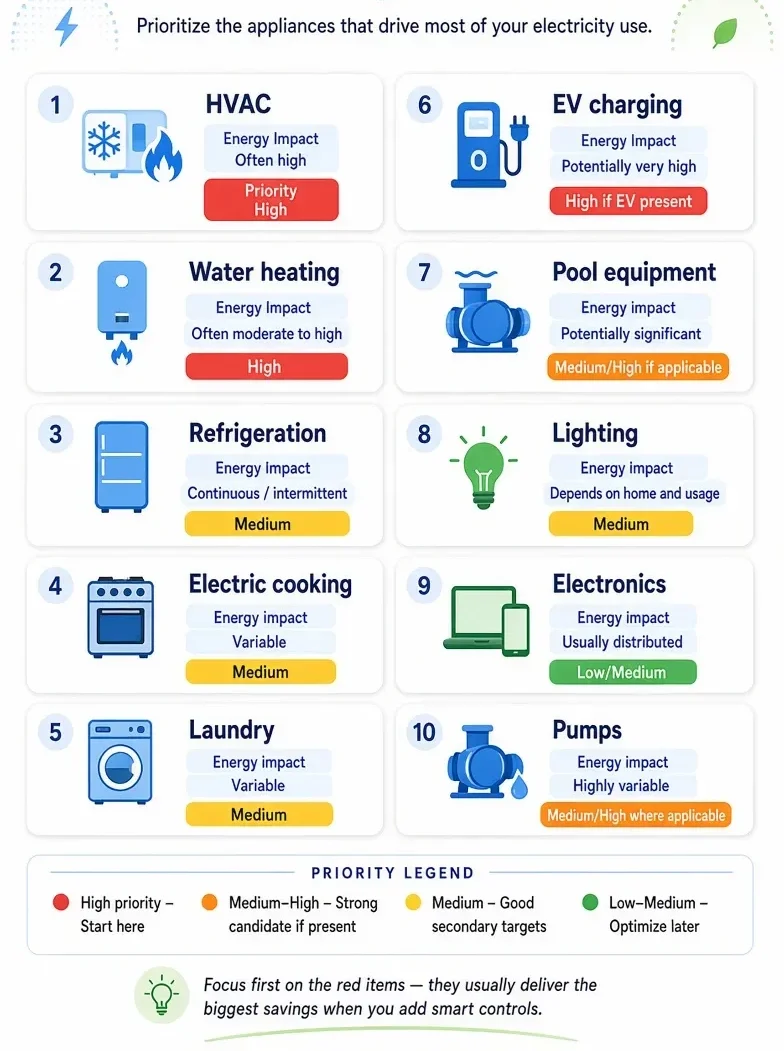
Step 2: Find Your Biggest Energy Loads
List the appliances that consume the majority of electric power in your home. You can prepare a table like the one below:
Step 3: Define Your Objectives
You have to decide what you want to optimize. Here are some common goals you can consider for your project and the tool you need for it:
| Goal | Useful Technology |
| Understand electricity consumption | Home energy monitor |
| Reduce HVAC consumption | Smart thermostat/HVAC controls |
| Control individual appliances | Smart plugs/switches |
| Increase solar self-consumption | Energy-management system |
| Store solar energy | Home battery |
| Manage EV charging | Smart EV charger |
| Coordinate multiple devices | Home energy management system |
| Improve outage resilience | Battery/backup system |
| Identify unusual energy use | Energy monitoring and analytics |
| Shift flexible loads | Smart appliances/load controls |
Step 4: Check Compatibility
💡 Tip
A shared protocol like Zigbee or Matter doesn’t guarantee two devices will actually work together. Before buying major equipment (HVAC, batteries, inverters), confirm manufacturer-level compatibility, not just protocol compatibility.
Before purchasing equipment, you need to check whether it can communicate with the systems you already have.
Common technologies include:
- Wi-Fi
- Bluetooth
- Zigbee
- Z-Wave
- Thread
- Matter
- Ethernet
- Manufacturer-specific communication protocols
- Cloud APIs
- Local APIs
You have to make sure that these are compatible with your existing systems. For major equipment such as HVAC systems, batteries, and solar inverters, manufacturer compatibility is more important than simply having a common smart-home protocol.
Step 5: Consider the Total Cost
You have to consider every detail when calculating the cost. The purchase price of equipment is only part of the matter. You need to think about other expenses, especially installation costs.
Step 6: Start With High-Impact Improvements
You don’t need to automate the entire house on day one. Try to consider a phased strategy like this:
Phase 1: Monitor
Phase 2: Improve HVAC
Phase 3: Automate Major Loads
Phase 4: Integrate Solar
Phase 5: Add Storage or EV Integration
Phase 6: Coordinate the Home
Step 7: Think About Privacy and Cybersecurity
Every connected energy device impacts the digital footprint of your home. That does not mean smart-energy technology is inherently unsafe.
It means connected equipment should be treated like other internet-connected devices.
Use:
- Strong, unique passwords
- Two-factor authentication when available
- Current firmware
- Secure Wi-Fi
- Reputable manufacturers
- Minimal account permissions
- Appropriate privacy settings
Step 8: Work With Qualified Professionals When Necessary
⚠️ Caution
Electrical panels, battery storage, and HVAC wiring aren’t DIY-friendly upgrades. Improper installation can void warranties, create fire risk, or violate local electrical codes. Always use a licensed professional for these.
Some smart-home products are simple consumer electronics. Others are part of the home’s electrical or mechanical infrastructure.
Professional installation is particularly important for:
- Electrical panels
- Solar PV systems
- Battery storage
- EV chargers
- HVAC wiring
- High-power appliances
- Backup systems
- Transfer equipment
- Whole-home energy-management systems
Final Thoughts
Using smart energy technology, you can improve the energy efficiency of your home and reduce your energy bills. You just need to invest in some smart devices to coordinate all your appliances. It helps you optimize energy use by your home’s consumers and generators by scheduling them effectively. If you combine it with a well-designed solar energy system, you can make your home grid independent. This is also useful for the environment because it reduces fossil fuel consumption. If you still have doubts, you can count on our help.
FAQs
What is a smart home energy system?
A smart home energy system monitors and manages how your home uses, produces, and stores energy.
What is smart technology in a home?
Smart home technology uses connected devices, sensors, and software to automate or remotely control household systems.
Do smart energy devices work?
Yes, smart energy devices can reduce energy waste and improve efficiency, but results depend on the device, how it is used, and the home’s energy needs.
How much does smart home technology cost?
Costs range from relatively inexpensive smart plugs and thermostats to thousands of dollars for integrated systems with solar, batteries, and energy management.

I’m an engineer specializing in renewable energy technologies, with a master’s degree in mechanical engineering and research focused on thermo-photovoltaic systems. I’ve contributed to ISI journals, presented at international conferences, and written for industry publications, sharing insights on sustainable energy solutions.